

Combining digital and in-person mental health care
On this page
On this page
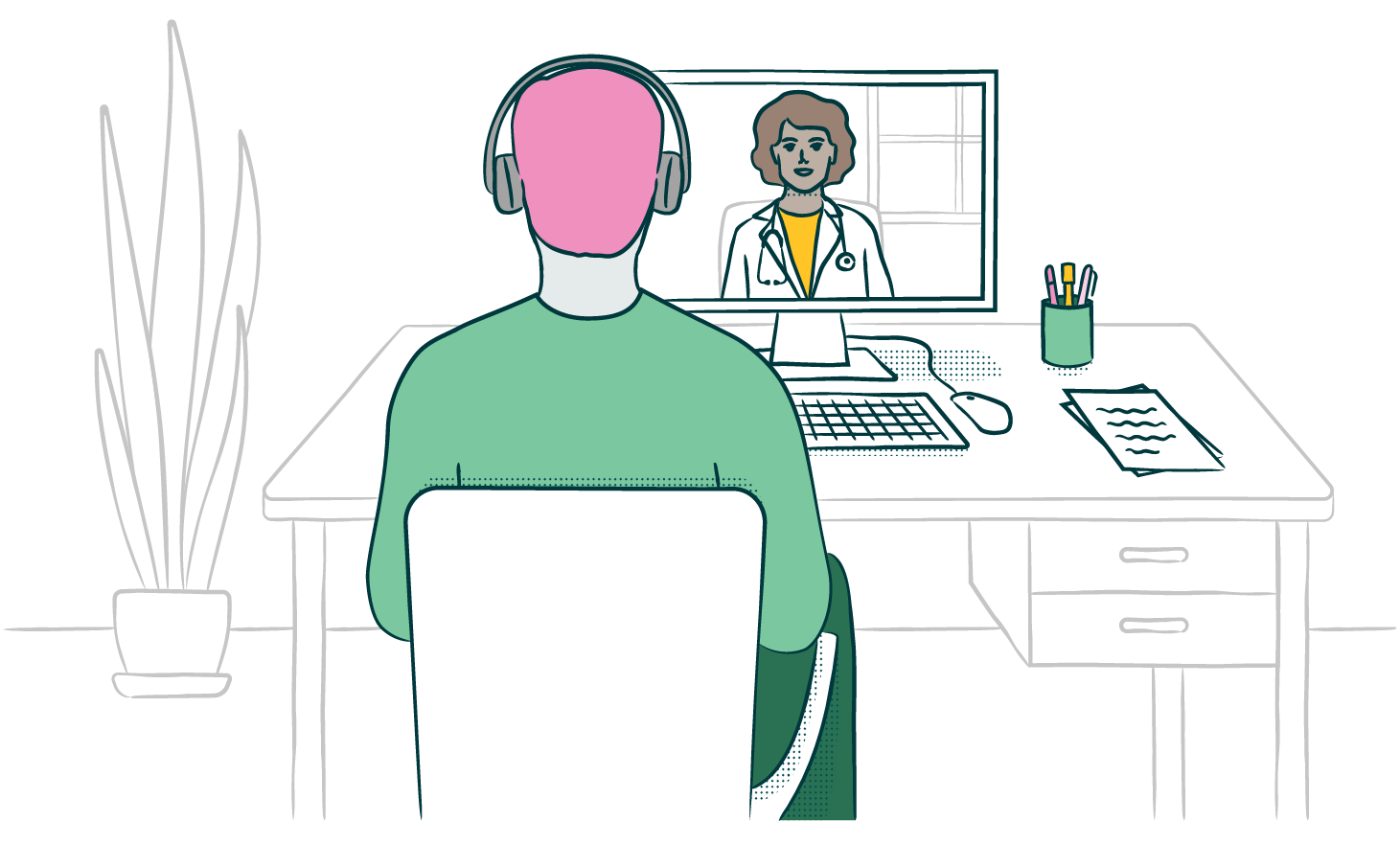
Blended care is the integration of digital mental health care and face-to-face care (such as telehealth or in-person). Patients take part in activities such as self-directed modules and support groups, complementing the face-to-face treatment you provide. It can be an important part of your toolkit as a busy GP or healthcare professional and a useful treatment option to discuss with your patients.
Frequently asked questions about blended care
Digital mental health refers to the use of online and internet-based resources to support delivery of mental health information and services. Digital mental health resources include a wide variety of options, for example downloadable fact sheets and information, smartphone apps, online programs, webinars and discussion forums.
If you choose to discuss blended care as a treatment option with your patients, it can be used in a variety of ways. For example:
- your patient uses online tools and support while they are waiting for an appointment with you or another health professional
- your patient completes online modules or skills training in between sessions with you, and face-to-face sessions focus on more complex or challenging areas of work
- supporting your patient to choose the digital mental health options that are most helpful for them
- self-paced online activities, such as reflections, video lessons, guided meditations, or tasks
- support via phone, SMS, or video conferencing
- online support groups online evidence-based treatment programs face-to-face or telehealth therapy sessions.
Together, you can review and modify the mix of digital and in-person treatment over time to find the right balance.
Blended care can enable patients to:
- access digital tools to support wellbeing
- have easier and quicker access to mental health services (due to remoteness, travel, finances, waitlists, etc.)
- complete therapy exercises and treatments at their own pace
- prepare for appointments
- practise skills between sessions
- learn self-help strategies throughout their journey
- know there are people and tools that can support them between appointments, or when the clinic is closed.
For clinicians, it helps to:
- maximise the effectiveness of in-person appointments
- provide more options to suit a patient’s needs, situation, and preferences
- support patients to make continued improvements
- focus your time on assessment and treatment.
Before recommending digital mental health resources, consider the person’s:
- access to online resources
- digital literacy, or how familiar they are with using the internet or online services
- reading literacy
- cultural and language needs
- the severity of any symptoms
- preference for face-to-face or online services.
Many GPs and other healthcare professionals would like to use a blended care approach with more of their patients but have reported it can be hard to find trusted online services that were suitable. To make it easier, our Service finder tool enables you to quickly search for services that may be suitable for your patient.
You can:
- search by diagnosis, issue, or disorder
- refine your search by age or cohorts
- view details about what they offer, costs, and clinical evidence
- select as many services as you think are needed, and
- review your selection, add notes, and send them to your patient.
The Service finder tool lets you provide your patient a link (via a printout with a QR code) to a page with all the services you’ve selected.
Your patient can access this at home, or whenever it suits them, and provide feedback on the services they’ve tried. They can also read more advice on keeping on track and preparing for their next appointment.
Online mental health programs have been around for many years. Over that time, many clinical trials have proven the effectiveness of a range of different treatment programs. You can find a list of the clinical and academic reviews on the eMHprac website, and in the specific service profiles on Medicare Mental Health.
The Australian Government Productivity Commission’s Mental Health Inquiry Report (2020) recommended the greater use of digital services. Doing so would increase patient choice and access to self-help and lower intensity treatment services.
The report stated that “for many people, supported online treatment can provide a convenient, clinically effective, low-cost way for them to manage their mental illness. It should be an option that is available to people as a choice, while recognising that some people will prefer other treatment options or a combination of options.” ¹
The findings of the Report included that online mental health services:
- are valued by some consumers, as they can be self-managed, anonymous, convenient, effective, low cost, and generally available at the time of need
- can complement or be used as an alternative to face-to-face therapies
- enable more effective and efficient use of clinician delivered services
- could free up care providers to assist those with more complex needs
- can be expanded quickly when demand increases.
Another finding of the Report was that the role of online interventions is different across cases in the stepped care model. Digital services were seen as the most appropriate for people with mild to moderate mental health challenges. However, there will always be the need for face-to-face mental health treatment — particularly when a person’s needs become more complex, or symptoms become more severe.
Since October 2022, Australian digital mental health services are able to be assessed against the National Safety and Quality Digital Mental Health Standards. This acknowledges the importance and maturing of digital mental health services. It provides a safeguard for anyone using or recommending services that have been accredited against the standards.
Like any type of treatment, effective blended care needs to meet your patient’s needs and goals, and work with your therapeutic approach. It works best when the treatments complement each other and are tailored to their specific needs.
Digital treatment solutions should also:
- be evidence-based and effective for your patient’s demographic
- be flexible and dynamic enough to engage them while being relevant to the treatment plan
- fit their capability (access, ability, and personal preference).