



Anxiety & Worry Information
In this section you will learn more about anxiety and worry.
- Learn more about anxiety, stress and worry, and different types of anxiety disorders
- How worry can feel out of control and how this can impact on your life
- How Generalised Anxiety Disorder (GAD) is diagnosed
- Factors which may increase a person's risk of developing GAD
- Which treatments are available
The self-help modules will then show you how to worry less, tackle your mental habits, address your feelings and practise different behaviours.
At the end of your investigations, you will have a different perspective on worry and how to manage it .
Anxiety, stress, worry – what's the difference?
Feeling anxious, stressed or worried is a normal part of life. Everybody feels this way at times. Some stress is even helpful - it can motivate you to take action, solve problems and perform at your best.
However, too much worry, stress or anxiety takes the shine off things… it can distract you, make you less efficient at what you do and too fearful to try things.
Different levels of stress
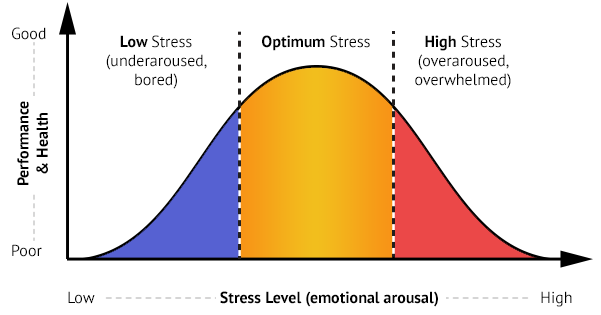
Click on the characters below to see how different levels of stress can affect performance:


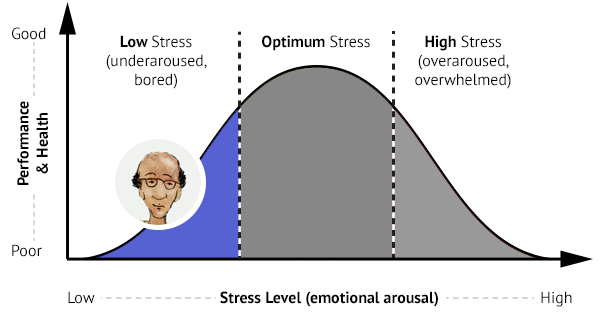
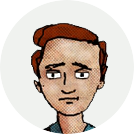
Rudi is suffering from eustress. He is bored and under-aroused. His performance is poor and he has a high chance of illness.
Rudi’s thoughts
“It all started so well – I love programming code. But then one day my boss started giving me the same
sort of code to edit. It’s now mind-numbing work and I am finding it really hard to concentrate. I am so
bored doing the same thing day after day. Zzzz…”
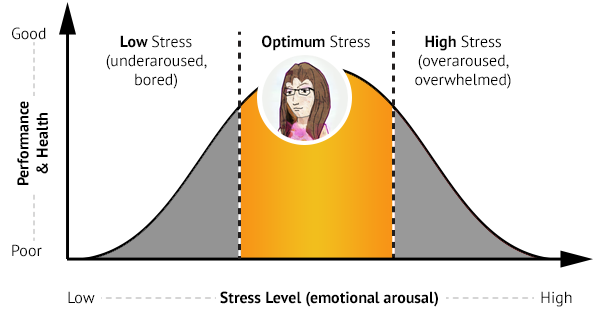
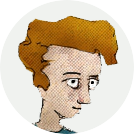
Patti feels a moderate level of stress and is optimally aroused. This level allows maximum performance and lowers the chance of illness.

Patti’s thoughts
“I was feeling stressed last week knowing that I had to speak in front of sixty people for my best
friend’s birthday party next week. But I’ve been practising my speech over and over and my Mum thinks it
sounds really good. I just have to remember to take my notes and I’ll be ok.”
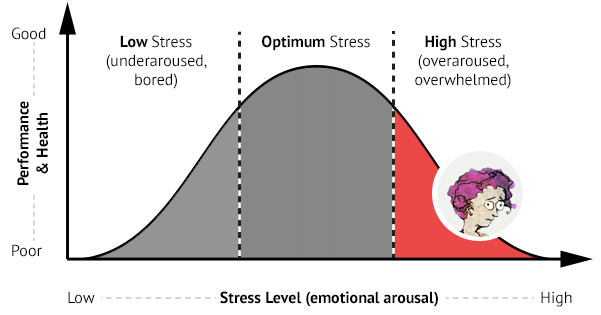
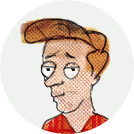
Nora is distressed. She is over-aroused and overwhelmed. This level of stress leads to poor performance and a higher chance of illness.
Nora’s thoughts
“It all started so well – my kids were perfect angels. They always listened to me and rarely misbehaved.
Now they are growing up and they never listen and always answer back. My partner won’t lift a finger to
help me. I am at the end of my tether and I just feel like giving up all the time.”
Note that it's not always clear what the difference is between stress, worry, anxiety and fear. Sometimes people use these words to mean the same thing. Next we'll have a look at how we'll be using these terms…
Stress
When we talk about stress we're referring to physical changes in the body and a felt experience. When humans become stressed their cortisol levels rise. Cortisol is a hormone which is part of the fight-flight system present in all of us. Cortisol prepares us for action.
How does stress affect your body?
Stress can be caused by outside events or by thoughts or worries, or both. We talk about the things which cause stress as stressors.
Worry and fear
Worry
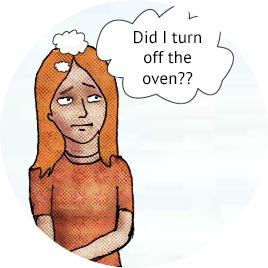
The word worry refers to a mental process in which a person has thoughts about things going wrong or something bad happening. It is thought to be mainly a verbal thinking process, although some people worry in images too.
People who worry often report tension.
Fear
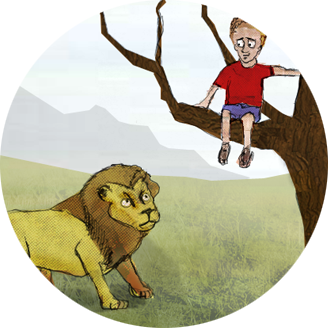
Fear is often thought of as a direct response to danger which is either present or about to happen.
Some people distinguish fear from anxiety by saying that fear is the awareness of danger or threat, whereas anxiety is the emotional response to threat or danger.
Anxiety
Anxiety is more of a technical term which we use to describe a combination of worrying thoughts or ideas and the physical responses which go with them. Such responses can include increased heart rate, sweating, dry mouth, stomach upsets, feeling dizzy. Anxiety can include both worry and stress.
Physical symptoms of anxiety
Suzy's worry about attending a party is accompanied by at least two physical symptoms:
Common to all kinds of anxiety is a sense of threat. The sense of threat may be about your physical safety, or social or psychological well being. The sense of threat can be either in response to something about to happen or to something which might happen in the future.
If anxiety is severe it can have a major effect on your life and general well being. Too much anxiety over a long period can also make you depressed.
Anxious thinking
Anxious thinking can take many forms.
Kinds of anxious thinking
Click on the characters to see examples of anxious thinking:


The situation
Suzy is going on a holiday.
“What if I miss my flight…?”
“…my holiday will be ruined!”
The situation
Nora is having dinner at a restaurant with her family.
“If I touch that plate…”
“…I’ll catch germs and then I could die!”
The situation
Rudi collects his mail.
“There’s a letter from the bank…”
“…now I’m in trouble!”
The situation
Thelma needs some groceries.
“If I enter that supermarket…”
“…I’m afraid I’ll shake and then I’ll go to jelly!”
The situation
Mark is deciding whether to meet his friends downtown.
“I can’t go near that place…”
“…it reminds me of when I got beaten up!”
The situation
Rodney has just broken up with his partner.
“If I see them I’ll fall apart…”
“…and then they’ll think I’m an idiot!”
The situation
Patti is cleaning her bathroom.
“There’s a spider – yikes…!!!
“…it’s sure to get to me!”
The situation
Leon has to give a talk at his work.
“This talk will be a flop…”
“…and everyone will think I’m stupid!”
As you can see, there are many different kinds of anxious thinking.
Anxieties tend to fall into one of several groups which are distinguished by particular behaviours or themes:
- The need to repeat or avoid certain behaviours to stop bad things happening (Nora)
- Possible mistakes or accidental events (Suzy and Leon)
- Fears of particular creatures or situations (Patti)
- Fears of having certain feelings which will be uncontrollable (Anna and Chris)
- Worry that everyday events are likely to turn out badly (Rudi)
Sometimes people have more than one kind of anxiety.
Anxiety disorders
If your levels of anxiety are high you may have an Anxiety Disorder.
The term Anxiety Disorder is used by mental health professionals and doctors to classify types of mental health problems. The two most widely used systems, DSM 5 and ICD-10, group anxiety disorders into various categories. Read more
The types of anxiety disorders listed below follow the classification used by DSM 5:
Panic is when a person experiences episodes of intense panic. These episodes are unpredictable, start abruptly, and usually last a few minutes. While having an episode of panic, a person’s heart may race, they may sweat, shake, have difficulty breathing, have chest pain, feel sick, dizzy or faint and may fear that they are having a heart attack or dying.
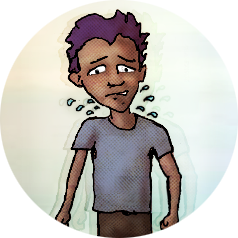
Panic Disorder is particularly distressing because the person has no idea when the attack will come, and often will avoid going out in case of an episode. This avoidance is understandable but may make the condition worse.
Panic Disorder can exist either with or without agoraphobia, which is an excessive fear of open or public places. In these situations, panic attacks may be triggered when the individual is exposed to their feared situations. Agoraphobia was previously classed as a sub-diagnosis within panic disorder, however it is now recognised as a distinct disorder because not all people who have agoraphobia experience panic symptoms.
Panic Disorder is very treatable using psychological therapies with and without medication.
People who have agoraphobia experience intense fear when they are in situations where they think it would be difficult to escape (or embarrassment is likely) if they experienced symptoms of panic or anxiety. These situations can include being in open public spaces, being in a crowd or waiting in line, being on public transport, or being in other closed situations like a movie theatre. Some people may feel anxious in any situation where they have to leave their house.
When people with agoraphobia are in their feared situations, or sometimes even when they just think about them, they experience intense anxiety which can include physical symptoms such as a racing heart, shortness of breath and sweating. This can be very distressing, and people may go to great lengths to avoid being exposed to any situations which trigger them.
Some people with agoraphobia also experience panic attacks, which are short episodes of intense fear in which many physical symptoms of panic are experienced. For these people, they may be diagnosed as having both agoraphobia and panic disorder.
Agoraphobia can be treated using psychological therapies with and without medication.
A Specific Phobia (sometimes referred to as 'Simple Phobia') is an excessive or unreasonable fear of a particular thing, place or situation (eg spiders, dogs, heights, being in closed spaces, having an injection). Exposure to the situation or thing, or even anticipating exposure to it, is very anxiety-provoking and it may trigger a panic attack.
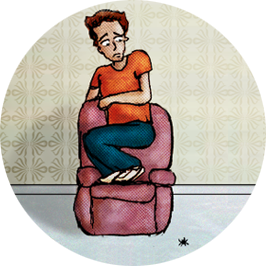
A Specific Phobia is only diagnosed when the feared situation is avoided or endured with great distress and the avoidance or distress significantly interferes with some aspect of a person’s functioning. Phobias of this kind are quite common and children often go through a stage of having one or more specific phobias.
Specific Phobias are treatable using psychological therapies such as desensitisation and exposure.
Social Phobia is diagnosed if the person has strong fears of being the centre of attention, or fears behaving in an embarrassing way and avoids situations where this might happen. Commonly, the person has these fears in social settings, such as eating, speaking in public, going to social gatherings or meetings.
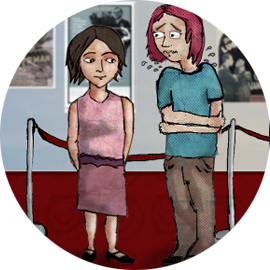
The person has symptoms of anxiety such as racing heart, sweating palms, difficulty breathing or feeling choked up, as well as symptoms of blushing, shaking, vomiting, and even feeling that he/she might lose bladder control. Most individuals recognise that their level of fear is excessive and want to do something about changing it.
Social Phobia is treatable using psychological therapies.
Generalised Anxiety Disorder is diagnosed when:
- the person has been worrying much of the time over a long period (six months or more);
- the worry feels hard to control; and
- the worry causes the person to be either restless, tense, irritable, tired or to have sleep problems.
The worry interferes with the person’s well-being and day-to-day life. The worry is usually accompanied by some degree of dread or apprehension about upcoming events, present situations and sometimes past events. It often includes a sense of time pressure.
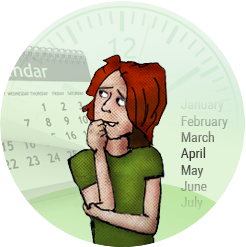
Generalised anxiety is different from having obsessions (where the same set of thoughts are repeatedly going through someone’s mind). It does not usually have a particular focus, such as a fear of social situations or spiders and may be about lots of different things. For example, it may relate to personal safety or the safety of family members, to work or school performance, to conflict at work or in relationships, or to forthcoming events or financial concerns.
Generalised Anxiety Disorder is treatable using psychological therapies with and without medication.
Obsessive-Compulsive Disorder is diagnosed when someone has repeated thoughts, images or impulses, or feels compelled to do certain behaviours over and over , to the point where these interfere with their well being and normal routines and functioning.
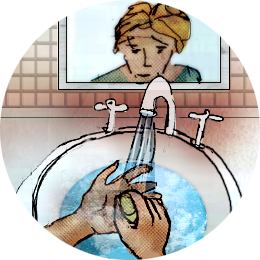
Compulsions are often performed in the belief that if the person does them they will prevent something bad happening. The person usually recognises that the obsessions and compulsions are unreasonable.
Obsessive-Compulsive Disorder is treatable using psychological therapies with and without medication.
Post-Traumatic Stress Disorder is when a person experiences symptoms of anxiety due to a major stressful experience (the type of experience that would induce fear in most people). Examples include near death experiences such as major car or plane accidents, or being the victim of violence.
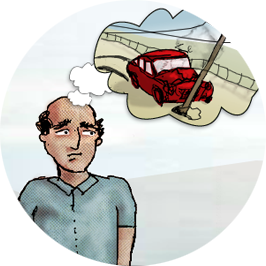
The person often experiences 'flash-backs' of the traumatic event, avoids situations that remind them of the traumatic event, and experiences other symptoms such as being on edge and difficulty sleeping.
Many people can’t remember some of the events surrounding the trauma.
Post-Traumatic Stress Disorder is very treatable and can be treated successfully using psychological therapies.
A person is diagnosed with an Adjustment Disorder when they experience major distress or feel unable to cope with day to day life after having been exposed to a stressful situation, or multiple stressful situations (e.g. a relationship ending, work, financial or relationship problems, a chronic medical condition).
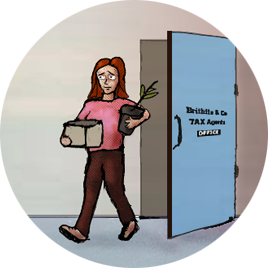
The person’s distress and reaction are greater than would normally be expected in the face of the particular stressful situation.
An Adjustment Disorder is not diagnosed where someone is distressed or experiencing coping problems following a bereavement.
Reference
Finding help for anxiety
If you are often very anxious and you're bothered by your anxiety, it's a good idea to speak to a GP or a mental health professional about the problem. These professionals can help to identify whether your symptoms are severe enough to be described as a disorder.
If you do have an anxiety disorder there are treatments which can help. Don't be shy about approaching your GP or a mental health professional to discuss your problem – not enough people with anxiety problems seek help for their difficulties. Why is this?
Severe anxiety can also be a symptom of other mental health disorders and it is important that people obtain professional help to ensure the correct treatment program is recommended.
If you are feeling suicidal there are people who can help.
See Emergency Help for crisis help information.
Who can help?
There are people and groups who can help by correctly diagnosing the problem, by providing or helping you to find the right treatments, or by providing support:
Your family doctor, primary care physician or General Practitioner (GP) can help you work out you are feeling the way you are and help you plan how to tackle your situation. They can rule out or treat any physical problems that may be causing your symptoms, prescribe medication if needed and refer you to local services that provide support and psychological therapy.
If you don't have a regular doctor or if you would like to find a new one, you can find local doctors by searching online. It can be helpful to let the receptionist know that you'd like to see a doctor who is interested in providing care for mental health problems, as some doctors have extra training and skills in this area.
Remember: Sometimes it can take a little while to find a doctor that you feel comfortable with and who provides the right kind of help for you. Your doctor should take time to listen, be sympathetic, supportive and warm, and be prepared to take notice of your treatment preferences. Be persistent and speak with another doctor if necessary.
Psychological therapy is provided by a range of therapists including clinical psychologists, other psychologists, social workers, mental health nurses, occupational therapists and counsellors. Therapists can help you to learn ways to deal with feelings of depression and anxiety but they generally cannot prescribe medication.
Note that psychologists need to be registered to offer services and are trained through accredited schemes. Counsellors are generally not required to be trained or accredited in the same way.
You can get free counselling over the phone or over the internet from mental health support services. The people answering your call will listen to your concerns and provide support and advice. They can also help you find services in your local area.
Crisis support lines are available 24/7 and can help people through even the most difficult times, including when they are feeling desperate and/or suicidal. These lines can also provide information and referrals for support in your local area.
- Crisis support lines in Australia
- Crisis support lines in the United Kingdom
- Crisis support lines in the United States
- Crisis support lines in Canada
- Crisis support lines in other parts of the world
Support groups involve people who have experienced depression or anxiety. Members of these groups provide each other with support, information and advice about coping with depression. Many people appreciate contact with other people who know what they are going through.
The original support groups involved face-to-face small group meetings. However, online support groups are growing very popular and these provide a means for people with depression to find anonymous, mutual support 24 hours a day regardless of where they live.
Examples of online support groups include those run by Relief (for Canadians), SANE (for Australians 18 years and older), ReachOut (Australians under 25 years), and My Support Forums - Mental Health Support Groups (outside Australia).
A closer look at general anxiety and worry…
The rest of this module and the e-couch Anxiey & worry self-help modules will focus on general worry and Generalised Anxiety Disorder (GAD).
General anxiety and worry go together
By general anxiety we mean anxiety which occurs often, in response to a whole range of different events or situations. It does not usually have a particular focus, such as a fear of social situations or phobias about spiders. It involves worrying a lot, usually with some degree of dread or apprehension about upcoming events, present situations and sometimes past events. You can also feel a sense of time pressure and some tension when you experience this kind of anxiety or worry.
While a certain amount of worrying is common, high levels of worry can make you feel ill at ease and unhappy or depressed.
Here we'll be looking at worry which feels out of control or makes you feel anxious much of the time.
Worry, worry, worry…
Worries often have a story quality – one thought leads to another to another…
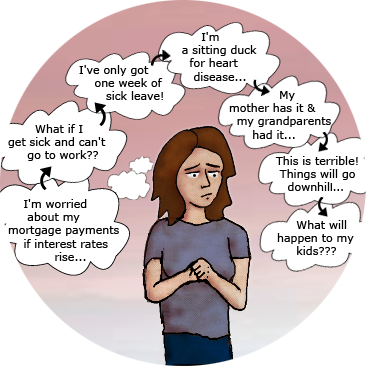
Does this pattern sound familiar to you?
The above worry has at least three things in common with worries generally:
- It focuses on the future
- It predicts a catastrophe
- There is an expectation of not coping
Worry can be about real or likely things, or it can be about remote and unlikely things. Regardless of the kind of worry you experience, it can become a problem if it takes up time, distracts you from your tasks, feels bad and doesn't lead to anything positive.
What does worry involve?
Worry is:
- A repetitive string of thoughts (more often in words rather than images) which may be hard to control
- Often about something which will happen soon or in the future, with a prediction that things will turn out badly
- A feeling of tension
- Often unrealistic or out of proportion to the imagined situation or threat
- Sometimes a negative feeling or mood
- Sometimes involved with feelings of restlessness or irritability
Common worry topics:
- Everyday experiences
- Personal and family health and safety
- Work or school performance
- Conflict at work
- Conflict in relationships
- Forthcoming events
- Financial concerns
People also worry about 'the big picture' - about the meaning of life and about death. This worry about one's existence is not uncommon but if it becomes a constant theme of your worries it may be important to explore further. You can read more about this kind of worry when you access the Anxiety & worry CBT module.
Who worries & why?
In general, people who worry:
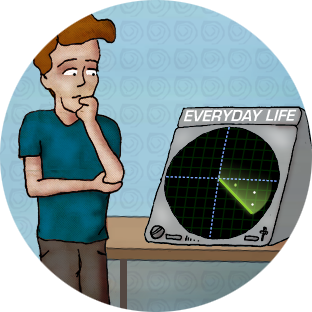
- Seem to have a mental radar which scans the horizon looking for possible dangers or threats to their wellbeing or safety
- Tend to interpret everyday situations as threatening and do not pay attention to the fact that things often turn out well
- Often find it harder to make decisions and may experience frequent doubts
- May tend to be perfectionistic; may have a greater desire to control things than other people
- Often tend to focus inwards on themselves – for example, on their thoughts, feelings, moods, attitudes
- May have concentration and sleep difficulties
Why do people worry?
People worry for different reasons:
- They believe that worrying helps them to solve problems
- They believe that if they don't worry, something bad will happen – a bit like a superstition
- To avoid facing a problem: while they're worrying they aren't actually dealing with the thing they find difficult or emotionally distressing
- Through habit
- Worrying runs in their family: for example if their parent worried a lot they may also come to see the world as a threatening place.
Can you get rid of worry?
If you've had a longstanding habit of worrying you may always tend to worry a little. However, you can certainly worry less than you do and you can pay less attention to your worries. You can also gain better control over your worry so that it's not such a big part of your life.
The e-couch Anxiety & worry self-help modules will show you some ways to help you worry less.
When does anxiety and worry become GAD?
According to the DSM-5 system developed by the American Psychiatric Association, GAD is diagnosed when all of the following are present:
-
You feel anxious or worried most days over a long period of time (at least 6 months)
-
Your worry is hard to control
-
The anxiety or worry brings any three of the following symptoms with it:

Restlessness or feeling on edge

Muscle tension

Irritability

Sleep disturbances

Being easily fatigued

Difficulty concentrating
-
The anxiety or its symptoms really bother or upset you, or they interfere with your day to day life or some important part of it
-
The focus of the anxiety is not limited to particular situations and the anxiety is not related to a past trauma. More…
Generalised Anxiety Disorder is not the same as panic. Panic usually occurs in relation to immediate situations and is sudden, very distressing and has a predictable set of symptoms.
The main symptom of GAD is too much worry, when the anxiety:
- is not caused by medication or drug use
- is not caused by another mental health problem such as depression or a psychotic illness
To find out whether you have GAD you would need to consult a mental health professional such as a psychologist or your general practitioner.
Regardless of whether you have GAD or not, learning some ways to help you deal with worry and tension can help to lessen your anxiety.
Reference
How common are anxiety disorders?
Anxiety disorders are very common. In fact they are more common than any other mental disorder.
How many people have an anxiety disorder?
Some large studies have found that more than 1 in 10 adults in Australia and the United States had an anxiety disorder in the previous year.
The rates of anxiety disorders were much higher than for other problems such as depression and the overuse of substances like alcohol and illicit drugs.
Click on the links below to see how common anxiety disorders are based on studies from different regions.
- Australia
- Europe
- United States
- Canada

Key references
Some facts about GAD
GAD facts:
-
GAD is a common anxiety disorder.
-
Women suffer from GAD more often than men.
-
GAD is a leading cause of workplace disability.
-
People with GAD frequently have another anxiety or mood disorder. It is not uncommon for both men and women with GAD to also have an alcohol or drug problem.
-
Having a mood disorder, like depression, at the same time as GAD makes it more difficult for a person to deal with their anxiety symptoms. More
-
People with GAD do not seek treatment from mental health professionals as often as people who have other anxiety disorders or depression. More
-
People with GAD frequently consult their GPs for physical problems and their rate of health care use is very high. More
-
GAD may start early in a person’s life although researchers disagree about when this usually begins. More
-
People with GAD often report that they have worried and felt anxious for a long time.
Who is vulnerable to GAD?

There is no single cause of anxiety. Anxiety can arise from several different sources.
However, there are various factors which may contribute to the development of GAD.
Having a risk factor doesn't automatically mean that you will develop GAD. It just means you have a higher chance of developing a the disorder than people without the risk factor.
Factors which may increase your risk of developing GAD:
- Being a woman.
- Being divorced, separated or widowed.
- Previous mental health issues.
- Family history of anxiety.
- Stressful life events. Recent stressful events can increase your risk of developing GAD. Examples of stressful events include breaking up or being in conflict with your wife or romantic partner, losing your job, caring for someone with an illness or suffering from a physical illness yourself.
- Sustained worry over a month or more.
- A pattern of learned behaviour - the habit of reacting anxiously in relation to future events.
- Having had a difficult childhood (where there has been hardship or trauma). Examples include abuse, neglect, losing someone you are attached to, and having a parent who is too strict.
- Having particular genes which affect the way the brain transmitters serotonin, noradrenaline and dopamine are processed.
- Having a sensitive or emotional nature.
In addition, anxiousness can result from:
- Physical health conditions, such as heart or thyroid problems.
- Medications.
- Caffeine.
- Monosodium glutamate (MSG) – a flavour-enhancer sometimes found in restaurant food.
- Drug abuse.
- Withdrawal after stopping some medications.
- Learning anxious behaviours from parents.
- Lack of practice in mastering and overcoming anxiety.
Key references
Comorbidity: a double challenge
More than one type of disorder…
When someone has more than one type of anxiety disorder at the same time, or both an anxiety disorder and another mental disorder, they have comorbid disorders. For example, some people have a comorbid Panic Disorder and Generalised Anxiety Disorder. Others have comorbid anxiety and depression.
Comorbid disorders are quite common. The 1997 National Survey of Mental Health and Wellbeing of Adults in Australia showed that over one third of people surveyed who had GAD also had depression.
Comorbidity in men and women
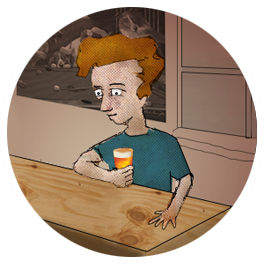
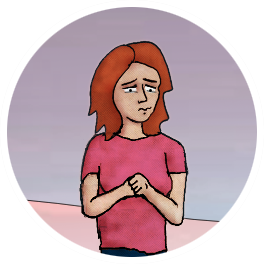
In the same study, women were more likely than men to have both an anxiety disorder and a mood disorder. On the other hand, men were more likely than women to have a substance use disorder in combination with an anxiety or mood disorder.
Researchers have suggested that men cope with anxiety by drinking alcohol and women tend to internalise anxiety and feel down.
Reference
Effects of anxiety disorders
An anxiety disorder can have a major effect:
-
It may decrease your sense of well-being and can interfere with everyday functioning. When anxiety becomes too great it affects your ability to cope with daily tasks or special projects and to reach planned goals. Being too anxious can also affect your concentration and decision making.
-
Anxiety can lead to cognitive narrowing. It can make you focus in too narrowly on a problem or situation and in the process lose your access to a wider range of solutions. Anxiety disorders cause people to take time off work. Some people have to stop working completely because of the problem.
-
Some anxiety disorders place people at risk of developing depression.
Anxiety disorders are also associated with higher suicidal risk. People with certain types of anxiety disorder see themselves as having poorer physical and emotional well-being. They can also develop a negative image of themselves. Anxiety can also have a significant effect on your social life.
It is also known that people with anxiety are at high risk for alcoholism, smoking and other forms of addiction. Long-term alcohol use can cause biological changes which may produce anxiety and depression.
Anxiety can also affect your physical health…
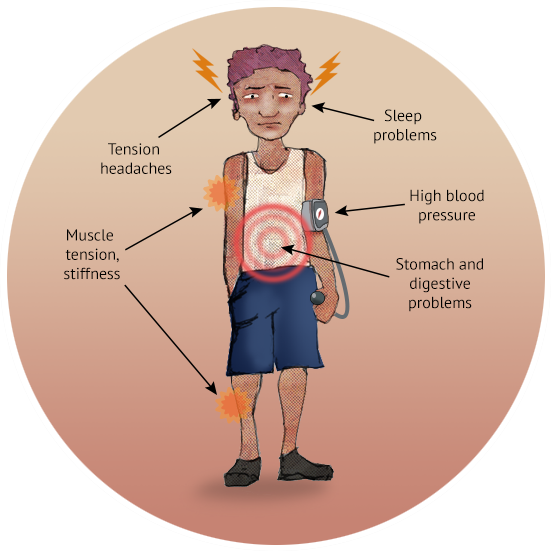
How does anxiety affect your body?
One of the most common parts of the body to be affected by anxiety is the stomach and digestive system. Anxiety is a significant factor in many cases of irritable bowel syndrome, for example.
People with an anxiety disorder may also be at greater risk of developing high blood pressure and thickening of the arteries. Anxiety is also associated with tension headaches and can cause sleep problems. People who are stressed often report general muscle tension, particularly stiffness in their neck and shoulders.
What keeps GAD going?
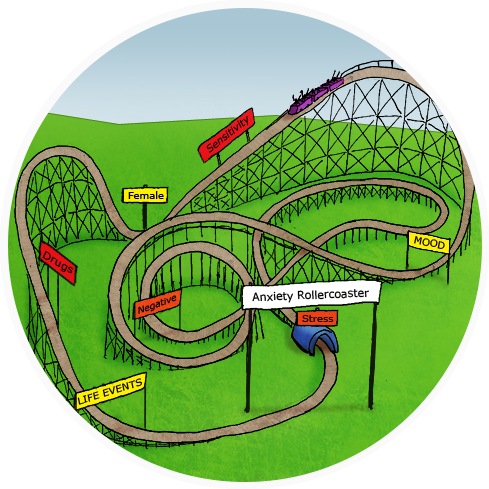
Factors which may influence whether someone continues to have GAD are:
- Stressful life events
- Anxiety sensitivity (a tendency to have excessive anxious physiological reactions to normal stressful situations)
- Negative feelings (being overly sensitive to negative events and having a tendency to experience negative moods)
- Having another mental disorder
- Gender (being female)
Characteristics that lower your risk of anxiety
Characteristics thought to lower the risk for anxiety:
- Emotional stability
- Non-ruminative style (being able to switch to thinking about other things when you have a problem)
- Mastery (having a belief in your ability to control things)
- Optimism (having a positive outlook)
- Exercise
Some risk factors are modifiable (can be changed by the individual) and some risk factors are not modifiable (they can't be changed by the individual because they are an essential part of the person or they have happened in the past).
Examples of modifiable risk factors:
- Habits of negative thinking
- Physical illness
- Overuse or abuse of drugs and alcohol
Examples of non-modifiable risk factors:
- Previous history of anxiety
- Having a family history of depression or anxiety
Some people have the odds stacked against them, and have large numbers of unmodifiable risk factors. This makes preventing anxiety more difficult, but it does not make the anxiety untreatable.
It is important to note that the risk of anxiety can be modified and reduced even if you are at high risk.
What works for treating anxiety?

Anxiety disorders are treatable!
If you suffer from significant anxiety problems, it is extremely important that you obtain treatment. This is both because of the major effect that anxiety can have on your life and because anxiety does not go away easily unless you tackle it head-on. When you’ve had anxiety for a long time, you may need to keep using anxiety management strategies from time to time over some years to help you keep your anxiety at manageable levels.
Several types of treatments are available for people with GAD. Medical, psychological and lifestyle treatments, or a combination of these, have been found to be helpful.
These treatments are listed below with either one, two or three smiley faces next to it. The more smiley faces, the more research evidence there is to support the treatment as useful. Those with the best evidence have three smiley faces next to them.
» read about the smiley face rating system

Medical treatments for GAD
Antidepressants
Our rating:

Doctors believe that people with depression have a low supply of chemical messages in the brain. Antidepressants are medications that change the level of these messengers. Antidepressants have also been found to be effective in the treatment of GAD. Research suggests they are especially helpful in reducing the cognitive or psychological symptoms of GAD, such as worry about bad things happening, low mood, being overly sensitive to others or being obsessional.
There are several different classes (types) of antidepressants. Each of these classes includes several different drugs. The main classes of antidepressants are listed below, along with common medications (the chemical name) and their brand names (the label they are sold under).
- Tricyclics: Amitriptyline (Tryptanol, Endep); Imipramine (Tofranil, Melipramine); Dothiepin (Prothiaden, Dothep); Nortriptyline (Allegron); Trimipramine (Surmontil); Clomipramine (Anafranil, Placil, Clopram); Doxepin (Sinequan, Deptran).
- Monoamine Oxidase Inhibitors (MAOIs): Tranylcypromine (Parnate); Phenelzine (Nardil).
- Selective Serotonin Reuptake Inhibitors (SSRIs): Fluoxetine (Prozac, Lovan); Sertraline (Zoloft); Escitalopram (Lexapro, Esipram); Paroxetine (Aropax); Citalopram (Cipramil); Fluvoxamine (Luvox).
- Serotonin and Noradrenaline Reuptake Inhibitors (SNRIs): Venlafaxine (Efexor); Nefazadone (Serzone); Duloxetin (Cymbalta).
- Reversible Inhibitors of Monoamine Oxidase A (RIMAs): Moclobemide (Auririx).
- Others/Atypical antidepressants: Agomelatine (Valodoxan); Bupropion (Wellbutrin); Mirtazapin - closely related but not identical to SNRI (Remeron, Avanza); Trazodone.
Most often SSRIs are used to treat GAD, and there is good scientific evidence which shows that escitalopram, sertraline and fluoxetine can be effective in the treatment of GAD. In addition, there is evidence to support the use of SNRIs for the treatment of GAD, in particular venlafaxine and duloxetine. There is also increasing evidence that a different type of antidepressant which affects melatonin in the brain (agomelatine) may be effective for treatment of GAD, especially where there is also sleep disturbance.
Note that antidepressants:
- Sometimes have side-effects. If side effects are serious and/or persist, then another antidepressant is usually tried. You should always talk regularly with your doctor about side-effects that you are experiencing.
- Are not addictive but should not be stopped suddenly. Always consult a doctor before stopping antidepressants.
- Can take 2-4 weeks to work so should not be stopped too early. Most antidepressants need to be taken for at least 6 to 9 months after symptoms disappear. Stopping an antidepressant too early increases the chances of symptoms returning.
- Are prescribed by a doctor. Usually this would be your general practitioner or family doctor. Psychiatrists also prescribe these medications.
Some people may not respond to the first antidepressant they are prescribed (i.e. it does not reduce their anxiety symptoms). However, they may respond well to another antidepressant of the same type, or one of a different type.
Antidepressants are one of the best treatments for adults with anxiety.
Key references
Medical treatments for GAD
Benzodiazepines
Our rating:

Benzodiazepines are a class of medicines which slow down the nervous system. They are used for different purposes: to relieve anxiety, as a short-term treatment of sleep problems, as muscle relaxants, and to treat some other conditions, such as seizure problems.
Benzodiazepines work by increasing the efficiency of GABA, a neurotransmitter (chemical messenger) in the brain. GABA inhibits the activity of cells in the brain, so benzodiazepines have an overall “slowing down” effect on the brain. This can relive anxiety.
Benzodiazepines can be habit-forming and lead to tolerance and dependency, especially if taken over longer periods. They can only be prescribed by a doctor.
There is a good scientific evidence that benzodiazepines are effective in the treatment of anxiety, particularly in the short-term.
This class of medication can be addictive and is susceptible to over-use and abuse, therefore some caution is recommended in using benzodiazepines for treating of GAD.
Benzodiazepines may be helpful for GAD, but they do have disadvantages.
Key references
Medical treatments for GAD
Antihistamines
Our rating:

Antihistamines may be useful in the short term for anxiety. They may bring immediate relief. The effects of antihistamines may come about because the medication sedates the individual. The medicine works by blocking histamine receptors, which in turn prevents arousal.
Hydroxyzine is an example of an antihistamine that is used for anxiety. There are a small number of research trials that show that hydroxyzine is more effective than a dummy (placebo) medication in the short-term treatment of anxiety symptoms in GAD.
Antihistamines have side effects such as poor coordination, difficulty concentrating and heart palpitations. They are not recommended for people taking tricyclic antidepressants, or medicines that affect heart rhythms.
Antihistamines may be useful for immediate relief of anxiety symptoms but are not recommended as a first-line treatment for GAD.
Key references
Medical treatments for GAD
Antipsychotics
Our rating:
Antipsychotics are medications which are primarily used to treat schizophrenia and bipolar disorder. However, anticonvulsants are also sometimes used to treat other mental disorders including GAD. Antipsychotics work by changing the levels of chemical messages in the brain in order to stabilise mood.
Antipsychotics can only be prescribed by a doctor.
A review study which pooled the data from four scientific trials found that one type of antipsychotic medication, quetiapine, is more effective than a dummy (placebo) for the treatment of GAD. However, the same review found that participants who received quetiapine were more likely to drop out of those studies due to side-effects. There is mixed evidence of the effectiveness of other antipsychotic medications for the treatment of GAD.
Antipsychotic medications, including quetiapine, can have side effects. These include drowsiness, sexual dysfunction and uncontrollable movements. It is important to talk to your doctor about any side effects you experience while taking medication. In addition, some antipsychotics can affect your heart, so your doctor might regularly check your physical health if you are taking antipsychotic medication.
Antipsychotics may be helpful for GAD although more research is needed. Antipsychotics do have disadvantages which should be discussed with your doctor.
Key references
Medical treatments for GAD
Transcranial magnetic stimulation
Our rating:
In transcranial magnetic stimulation ('TMS'), a magnetic coil is placed next to the scalp. The coil delivers magnetic pulses which cause electrical changes in the brain and stimulate brain cells. The magnetic pulses are delivered repeatedly, so the treatment is known as repetitive TMS (rTMS). The most common form of rTMS uses fast pulses and is called High Frequency rTMS. Low Frequency rTMS uses slower pulses. rTMS changes brain activity. It is not known exactly how this affects anxiety.
Some studies have compared rTMS with sham rTMS to see if rTMS is effective. In the sham form of rTMS, either a fake coil is placed over the scalp, or a real coil is used but is pointed away from the scalp. Several studies have shown that rTMS is more effective than the sham rTMS for the treatment of GAD. This included longer-term benefits. However, more research is needed to establish the effectiveness of rTMS for the treatment of GAD.
Some common side effects of rTMS include headaches, discomfort on the scalp, tingling and light-headedness. More serious side effects are rare. Serious side effects include seizures, hearing loss, and mania. Doctors use rTMS under special guidelines designed to reduce the risk of seizures and other problems. More research is needed to understand if there are any long-term side effects of rTMS.
rTMS may be effective for the treatment of GAD however it is an experimental treatment.
Key references
Psychological treatments for GAD
Cognitive Behaviour Therapy (CBT)
Our rating:
Cognitive Behaviour Therapy (CBT) is an effective treatment for GAD. When people are anxious, their thinking can become distorted and negative. The negative thoughts people have about themselves, others and the world can lead to more anxiety.
CBT teaches people to think and behave differently, thereby reducing anxiety. CBT looks at the way you think about your self, your anxiety and the social situations that create anxiety for you. The behaviour part of CBT involves introducing new behaviours, or changing existing behaviours, to help reduce avoidance behaviour and bring about more positive experiences.
Traditionally CBT is delivered with the help of a therapist specially trained in CBT. You can also learn the techniques taught in CBT by yourself through internet-delivered self-help programs such as e-couch, or through books.
Many studies have shown that face-to-face CBT is effective for treating GAD both in the short-term and in the long-term. There is also scientific evidence that shows that CBT delivered via the internet is effective for the treatment of anxiety.
CBT is one of the best treatments for GAD.
e-couch includes a CBT self-help module for anxiety & worry which you can access to learn more about CBT.
Key references
Psychological treatments for GAD
Relaxation therapy
Our rating:
Relaxation therapy refers to a number of techniques designed to teach someone to relax voluntarily. These different types of therapy include progressive relaxation, release-only relaxation, cue-controlled relaxation, differential relaxation, rapid relaxation and applied relaxation.
Progressive Muscle Relaxation, probably the most common form of relaxation therapy, teaches individuals to identify and relax specific muscle groups in a fixed order.
Applied Relaxation has been found to be effective for treating Generalised Anxiety Disorder. This technique requires that the person learn Progressive Muscular Relaxation and then practise the techniques when confronting the feared situations. As such, this technique involves a form of Exposure Therapy.
Relaxation brings about a state that blocks the physiological and psychological arousal associated with anxiety. Relaxation teaches you to recognise symptoms of anxiety and respond to them with a technique that reduces arousal.
There is scientific evidence from several studies that relaxation therapy is effective for the treatment of GAD compared to no treatment. It has also been found to be as effective as Cognitive Behaviour Therapy (CBT) in the short term although not as effective as CBT in the longer-term.
e-couch includes a Relaxation self-help module for anxiety & worry which includes downloadable relaxation mp3 files.
Key references
Psychological treatments for GAD
Acceptance and Commitment Therapy (ACT)
Our rating:
Acceptance and Commitment Therapy (ACT) is a type of talking therapy that is done with the help of a therapist. ACT teaches people two main processes: (1) acceptance of the situation based on what can and can’t be changed; and (2) commitment to personal values. These processes aim to help a person cope better with experiences that may cause anxiety.
By teaching psychological flexibility, ACT empowers a person to break psychological rigidity and respond to situations in a way that will help their anxiety. ACT also helps people to make choices that align with their personal values.
There is not as much evidence to support ACT as there is for other types of therapy, such as Cognitive Behaviour Therapy . However, two studies have found that that a type of ACT called acceptance-based behaviour therapy is more effective for GAD than no treatment, and two other small trials have found that ACT is as effective as relaxation therapy or CBT.
More research is needed to determine if ACT is effective for GAD.
Key references
Alternative and lifestyle treatments for GAD
Acupuncture
Our rating:
Acupuncture is a traditional Chinese treatment. Acupuncturists insert needles at particular points in the body and then manipulate these needles. Sometimes, electric current is put through the needles. This is known as ‘electro-acupuncture’.
According to Chinese medicine, there are two types of energy which flow through channels in the body. Illness results from an imbalance of these energies. Acupuncturists insert needles at particular points along the channels to correct the imbalance.
The results of some small studies indicate that acupuncture can reduce symptoms of anxiety in individuals with an anxiety disorder. This includes studies where acupuncture was compared to ‘sham’ acupuncture where different needle sites were used. However, no high quality scientific trials have been conducted and more research is needed.
Some discomfort, minor bleeding or bruising may occur from the acupuncture needles. Single-use needles should be used.
Acupuncture appears to be a promising treatment for GAD, however more high quality research is needed.
Key references
Alternative and lifestyle treatments for GAD
Exercise
Our rating:
There are two main types of exercise; aerobic and anaerobic. Aerobic exercise includes activities such as running, cycling, or playing sports, and improves overall fitness and builds up the heart, circulation and lungs. Anaerobic exercise includes strength training, such as lifting weights or doing push-ups, and high-intensity exercises such as sprinting. These types of exercise help to build up muscle and strength.
There are many views as to how physical activity works for anxiety. Exercise may block negative thoughts, or distract people from daily worries. Physical activity may increase levels of neurotransmitters (chemical messengers) in the brain, which may reduce anxiety. Physical activity may increase endorphins, which are chemicals in the brain that have 'mood-lifting' qualities.
Exercise has shown to be effective for mild to moderate anxiety, however more studies are needed to examine the effect of exercise on specific anxiety disorders. For GAD, a small study of women found that both aerobic exercise and strength training were more effective at reducing anxiety than no treatment.
Physical activity and exercise can support your general health and wellbeing. Exercise may help in reducing anxiety symptoms.
e-couch includes a Physical activity self-help module for anxiety & worry .
If you are increasing your exercise, feel concerned about injuring yourself, or if you are over the age of 35 years, talk with your health professional about which type of exercise may be best for you.
Key references
Alternative and lifestyle treatments for GAD
Yoga
Our rating:
Yoga originated in India where it was practised by followers of the Hindu religion. Yoga as it is practised in Western countries generally involves three parts. These are postures (asanas), breathing exercises (pranayama) and meditation (dhyana). Yoga exercises are thought to reduce muscle tension and lead to relaxation and in turn help distract from negative thoughts.
A recent study found that Kundalini yoga was more effective for the treatment of GAD than stress education. However, Kundalini yoga was less effective than Cognitive Behaviour Therapy . Other studies have found that other types of yoga may also be effective, but these studies are not of high quality and more research is needed.
Yoga is not as effective as CBT but it does appear to be a promising complimentary therapy for GAD. More good quality research is needed.
Key references
Making your life better: e-couch Self-help
GAD and other anxiety disorders can really interfere with your life over a long period. For this reason it's important that you seek out the right treatment for you. You also need to keep working on your anxiety to reduce its effects – even after you begin to feel better.
e-couch can help you to take steps to help yourself through the Anxiety & worry self-help modules from the dashboard.
So take the e-couch self-help controls and learn what you can do about your anxiety!