



Loss and bereavement
What thou lovest well remains, the rest is dross
What thou lov'st well shall not be reft from thee
What thou lov'st well is thy true heritage
from The Pisan Canto by Ezra Pound
Losing someone you love can feel catastrophic.
It can cause such terrible pain that it feels as if you won't recover. When the loss is great, you may wish you could die too.
In spite of the fact that death is inevitable, there is much denial about it. People like to pretend that life goes on forever and they work out ways to avoid facing sadness and loss. Movies and TV series, as well as advertising, often reinforce these patterns and beliefs. Developments in science mean that before very long, people will be able to grow new tissue to replace organs and so live longer and longer. The Peter Pan ideal lives on, which makes it even harder to face the reality of loss.
Facing loss and grieving are major tasks – ones for which you need time and energy, as well as support and understanding.
Grieving cannot be fast-tracked. It happens slowly as the meaning of your loss is processed over time.
Some myths about grief and loss can make it harder for you to deal with the loss of a loved one. One such myth is that healthy grieving means 'getting over' a loss, 'moving on', putting the past aside…
Let's start by taking a look at what's actually happening when we experience grief…
Grief – What's happening to me?
Loss of an important relationship or attachment
Grief is a reaction to the loss of a significant attachment. The attachment may have been to an actual person, a person you have never met (e.g. a birth parent, an unborn child, a miscarried pregnancy) or a pet or animal (here we will use the word 'person' and 'someone' to mean any significant being who has died.)
Loss of a role or part of yourself
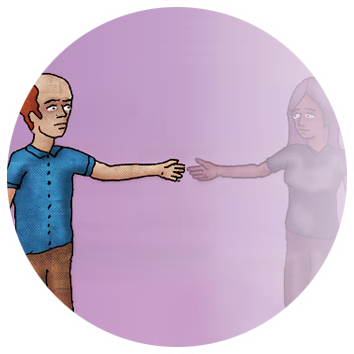
Loss of a close relationship not only involves the loss of a person; it can also mean the loss of a role for yourself. For example, if you lose your spouse, you may also lose the social role and the sense of identity which came from that role. Sometimes, people feel the loss of being a couple in social situations where they have been used to attending as a couple and where others have attended only as a couple.
The loss can feel like a part of yourself has gone too. The part could be the self which used to laugh and feel engaged with other people, or it could be the part of you which was loving and affectionate.
Grief – What's happening to me?
Other losses
A major loss can trigger other losses. This can be at the time of the loss or over many years.
Further losses can be triggered months or years after the initial loss, at times of special significance. Such losses can also arise after you have realised the meaning of the original loss in the light of further experience. For example, the loss of a partner during one's 30s may mean that the opportunity to have children is lost. This loss may not be felt until some years down the track.
With the loss of someone close to us through death, we may face our own mortality for the first time and so face the loss of a carefree existence.
When the inevitability of death is accepted, this can also lead to loss of a sense of meaning or purpose. Sometimes, losing someone important can also leave you feeling cheated by life – this isn't what you expected to happen.
Other losses associated with a bereavement include: loss of other relationships, loss of income, loss of the family business, loss of a way of life, loss of health.
Sometimes when a person with whom you didn't get on very well dies, you can feel as if the opportunity to repair or improve the relationship is lost. One example of this might be the death of a parent who neglected you in favour of your sibling or otherwise hurt you. Even when you are completely cut off from a parent and have not seen them for years, news of their death can be devastating because it means you can never restore or fix the relationship.
Grief – What's happening to me?
Common reactions
The interactive below shows some emotional reactions which commonly occur with loss. Note that profound sadness after a major loss is normal.
Common emotional reactions
Click through to see some common emotional reactions that occur with loss:
Grief – What's happening to me?
Sometimes the pain of a loss is worse some months after it has happened.
This is after all the activity surrounding the death, such as the funeral, social occasions and legal meetings are over. It can take quite some time before the full impact of a loss is felt and before you have the mental space to face the loss.
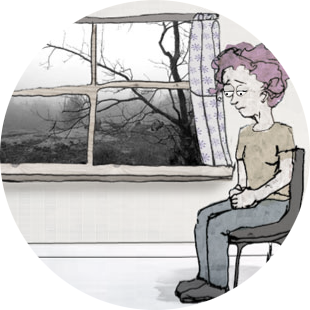
After a major loss, it is usual to be quite absorbed by the loss for some time. It could be months or longer. You may find yourself thinking over and over about the person who has died, and about yourself and your life.
Anxiety about how you will cope without the person you have lost is also very common.
Not everyone feels profound sadness or distress after an important person has died. Some people may just miss the person and feel a mild melancholy.
The truth about grief and loss
Don't believe the myths
People often have unreasonable expectations and beliefs about grief and loss. It is important to realise that:
A major loss will always be remembered, and at different times, grief about it will re-surface – sometimes only as 'pangs' but also in more intense form. Sometimes grief can come on suddenly and take you by surprise.
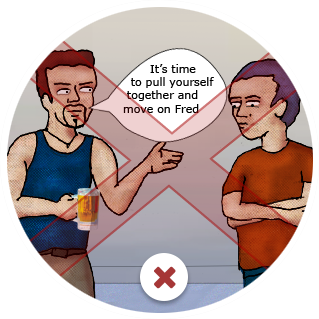
You can't replace the loss of one person with another relationship. A loss of a particular person or other being will always be a loss.
People remain connected with someone who has died, in different ways. Rather than disconnecting from the person after they die, people change their relationship with the person and continue a new kind of relationship with them.
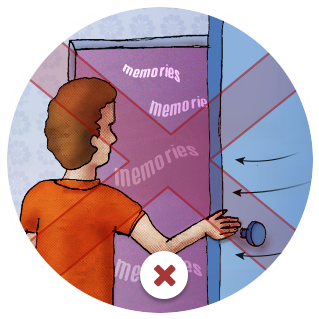
They do this through adopting the person's methods for doing certain things, 'talking' either inwardly or aloud to them, keeping the person alive in their mind, honouring anniversaries and birthdays, visiting places the person liked and finishing projects the person began.
There are many ways in which people continue to relate to a person who has died.
Although grief involves particular feelings, how intense these are and when they occur is very individual. The grief you feel depends on your relationship with the person who has died, the type of change the loss brings about, and your particular characteristics.
Grief about a major loss occurs in fits and starts. This is because it takes a lot of energy and because the process of adjustment to a major loss is slow. Also, other aspects of your life must go on and sometimes grief can only be allocated limited time periods.
Different people deal with loss in different ways. People from different cultures also mourn in different ways.
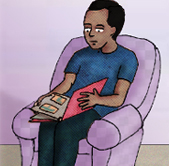
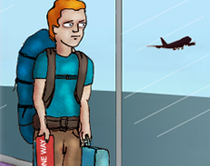
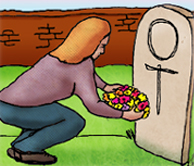
The intense pain after a major loss gradually lessens as time passes. However, the process of mourning becomes part of your life.
Who grieves?
Nearly everybody suffers a major loss through someone's death, and most people will go through some kind of grieving process at some stage of their life.
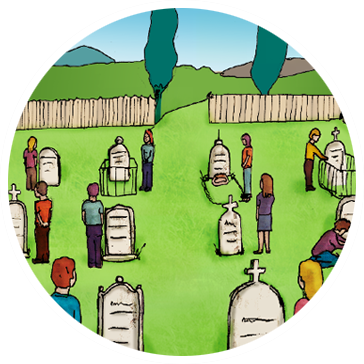
Once you're over 40, the chance of somebody close to you dying increases. During middle age and when people are older, they develop age-related health problems. Parents and grandparents grow old. This cannot be avoided.
Although deaths among younger people are uncommon, they still occur. Unforeseen accidents happen and, sometimes, someone who is relatively young can die unexpectedly of health problems.
Stigma and denial
In Western cultures, there is a tendency to blame people for not getting over losses. This trend starts when people are young. How often have you heard teenagers say 'get over it!' to each other?
While toughness can be a virtue, it certainly isn't when it comes to grieving.
In our culture, loss in people's lives is often ignored or denied. Even though loss is happening all the time, it's as if people think it will never happen to them. When it hits them, the story changes.
Stigma and denial
Click through to see how Mark reacts to his friend’s loss:
When grief isn't acknowledged by others (disenfranchised grief)
Disenfranchised grief refers to grief about a loss which is often not openly acknowledged, publicly mourned or socially supported.
An example is the expected death of an older person. Because someone is old and sick doesn't mean it's the right time for them to die. It may never feel like the right time for someone to die when they're your friend, a parent or other family member, or a spouse.
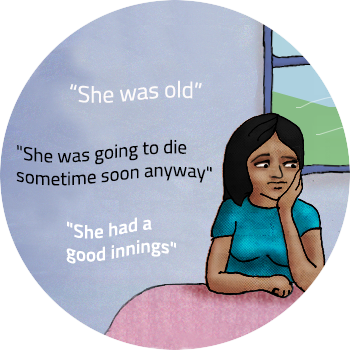
Not only is it not part of our culture to acknowledge grief in relation to older people who die, but also, support is not given to older bereaved people. Thus, the grief of spouses or friends of older people who die is often not acknowledged. It is as if their grief doesn't count or isn't significant. In fact, they have often had a lifetime with the person who has died and the loss is very great. This can be made worse by the fact that when people grow older, they may have fewer sources of support. Their friends may have died and they may also have less money to enable them to visit people, to go out to different places, or to seek other support.
Siblings and friends of someone who dies are often not regarded as the main grievers. Friends, particularly, are often excluded from the public mourning process.
Miscarriages are often ignored as legitimate reasons to grieve. Because the baby was not born and may have been very unformed, there is a tendency for others to think losing a baby through miscarriage isn't a big loss. The fact is that many people mourn miscarriages, regardless of whether they have gone on to have other children or not.
The same is true for animal companions. The loss of a pet is often seen as trivial, as if it were the loss of a toy. But, for some people, it involves loss of an important relationship in which there was interaction, mutual caring, physical contact and significant companionship.
Finally, people grieve for losses of loved ones who are still alive but have become mentally ill, have had a brain injury, or have developed Alzheimer's Disease or other diseases which lead to personality change and major loss of function . Although the person is still alive, the people who care for them may feel they have 'lost' them, as if they had died.
Losing someone through suicide
Losing someone you care about through suicide can leave you feeling shocked, helpless and profoundly sad. Questions may keep running through your mind, such as: 'Why did they do it?', 'Did I do something wrong?', 'Is there something I could have done to prevent this?'. These questions, doubts and feelings of guilt are very common. Sometimes you can even feel that you don't deserve to live or simply that you don't want to carry on.
It's really important that you don't suffer alone.
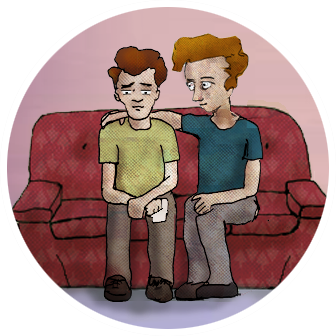
Talking to someone who can understand and support you through this can be a big relief. It can also help you to see yourself and your life in a different perspective.
Am I depressed?
Grief is not the same as clinical depression and people don't usually develop a depression after a loss. But it is a risk following a major loss.
Sometimes people struggle more than usual to get over a loss. They may be unable to put the image of their loved one out of their minds, or they may be unable to accept the fact that the person has died. This may be a sign of complicated grief.
Complicated grief can occur when someone's death was particularly traumatic. If you feel that you have been grieving for a long time (for example, six months or a year) and there is no improvement in your general well-being, this may be a sign that you need some professional help.
When to get help for your grief
You should seek help if:
- you're feeling depressed much of the time and can't get out of it
- you're feeling suicidal
- people you are close to won't talk over your loss with you
- you've had several losses close together in time
- you're using more alcohol, tobacco, recreational drugs or prescription or other medications
- you've lost or gained a lot of weight
- you are experiencing problems with sleeping
- you feel worried, anxious or stressed most of the time
- you cannot stop thinking about the circumstance of the person's death
You might also consider taking a look at the e-couch Depression self-help modules to find out more about depression and some methods for tackling it.